

Planning a trip to Spain in 2026? Discover the ultimate showdown between Barcelona and Seville. From Gaudi’s architecture to authentic Andalusian tapas, we compare the culture, food, and top attractions to help you choose your perfect destination.
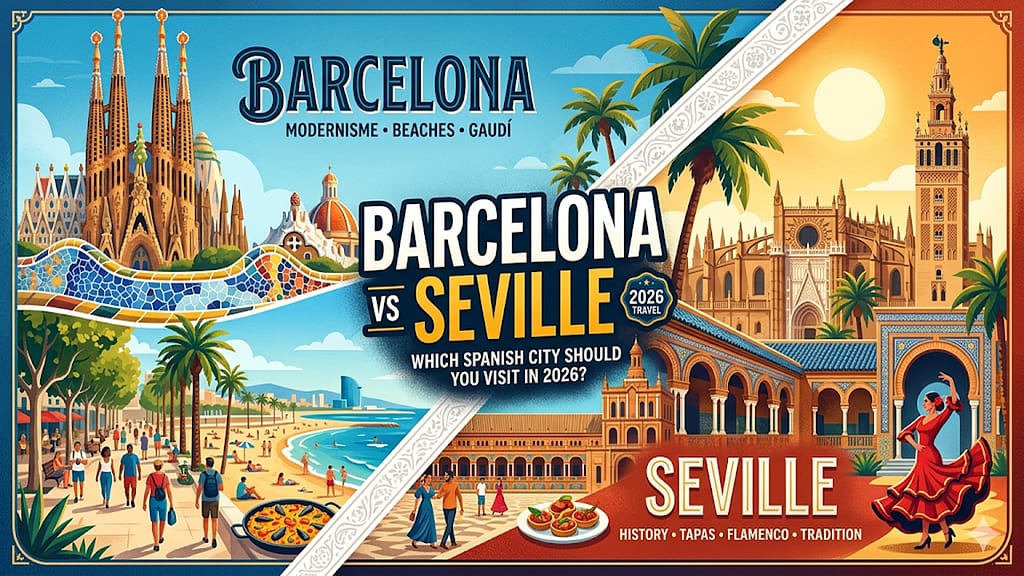
Spain remains a titan of European tourism, yet as we look toward the travel landscape of 2026, the choice between its two most iconic urban jewels—Barcelona and Seville—has never been more compelling. While both cities serve as gateways to the Spanish soul, they offer fundamentally different versions of the Iberian experience. Barcelona is the cosmopolitan heartbeat of the Mediterranean, a place where avant-garde design meets the salt air of the coast.
Conversely, Seville is the sultry, historic core of Andalusia, where the scent of orange blossoms lingers in narrow medieval alleys and the rhythm of flamenco feels like the city’s natural pulse. Choosing between them isn’t about finding which is “better,” but rather deciding whether you want to chase the sunset on a beach or lose yourself in the golden shadows of a Moorish palace.
1. Atmosphere and Cultural Identity
The atmospheric divide between these two cities is palpable from the moment you step into their streets. Barcelona is a sprawling, high-energy metropolis defined by its unique Catalan identity and the whimsical, organic architecture of Antoni Gaudí. As you walk through the Eixample district or look up at the towering spires of the Sagrada Família, you feel the weight of a city that has always looked toward the future while honoring its artistic rebels. It is a place of grand boulevards, international crowds, and a constant breeze from the sea, making it feel breezy and avant-garde. It is the perfect destination for the traveler who thrives in a fast-paced environment where modern art galleries sit comfortably next to Roman ruins.
In stark contrast, Seville offers a much more intimate, traditional embrace that feels like stepping into a living history book. As the capital of Andalusia, Seville is the undisputed home of the most famous Spanish stereotypes—but here, they aren’t clichés; they are a way of life. The atmosphere is slower, more deliberate, and deeply romantic.
The city’s history is a rich tapestry of Roman, Visigothic, and Moorish influences, best exemplified by the intricate tilework of the Alcázar and the towering Giralda. In Seville, the culture is found in the “duende” of a late-night flamenco performance in Triana or the social ritual of the evening paseo (stroll) through the Santa Cruz quarter. If Barcelona is a vibrant neon painting, Seville is a classic oil masterpiece bathed in golden light.
2. A Culinary Journey: Catalan Innovation vs. Andalusian Tradition
For the food-focused traveler, both cities are paradises, but their menus tell very different stories. Barcelona’s dining scene is a sophisticated blend of “Mar i Muntanya” (sea and mountain), where fresh Mediterranean seafood meets hearty Pyrenean meats. The city is a hub for Michelin-starred innovation, yet it remains grounded by legendary institutions like the La Boqueria market. A culinary tour here involves sampling sophisticated tapas, rich arròs negre (black rice), and the iconic Crema Catalana for dessert. In 2026, Barcelona continues to lead the way in sustainable “farm-to-table” dining, making it a dream for those who want to see where the global food scene is heading.
Seville’s food scene, however, is arguably the most social and spirited in all of Spain. This is the city that perfected the art of the “tapas crawl,” where the goal is to enjoy one small plate and a cold glass of sherry before moving on to the next historic tavern. The flavors here are bold and sun-drenched: the world’s finest Jamón Ibérico, refreshing gazpacho to beat the Andalusian heat, and crispy pescaíto frito (fried fish). There is a timelessness to eating in Seville; whether you are standing at a crowded wooden bar that has been open since the 17th century or enjoying churros dipped in thick chocolate in a quiet plaza, the focus is always on the quality of the ingredients and the joy of the company.
3. Iconic Landmarks and Modern Marvels
When it comes to sightseeing, Barcelona is synonymous with the Modernisme movement. No trip is complete without witnessing the ongoing evolution of the Sagrada Família, which, as it nears its final stages of completion in 2026, remains one of the most awe-inspiring sights on earth. From the colorful mosaics of Park Güell to the high-end shopping and architectural wonders along Passeig de Gràcia, the city feels like an open-air museum dedicated to creative genius. Beyond the architecture, the city’s urban beaches like Barceloneta provide a rare opportunity to combine a world-class city break with a relaxing dip in the Mediterranean Sea.
Seville counters this with a historical gravity that is hard to match anywhere else in Europe. The Seville Cathedral, the largest Gothic cathedral in the world, stands as a breathtaking monument to the city’s former wealth and power. Just a short walk away, the Plaza de España offers a cinematic backdrop of bridges and fountains that perfectly captures the grandeur of Spanish Renaissance Revival architecture.
Yet, Seville isn’t stuck entirely in the past; the Metropol Parasol (locally known as Las Setas) provides a stunning modern contrast, offering panoramic views of the city’s terracotta rooftops. Walking through Seville is a sensory experience where every corner reveals a hidden courtyard, a blooming jasmine vine, or a historic plaza.
Which One for You?
- Choose Barcelona if you are looking for a high-energy, multifaceted vacation. It is the ideal choice for travelers who want to balance sightseeing with beach days, enjoy world-class nightlife, and explore the cutting edge of European art and design.
- Choose Seville if you are looking for the “authentic” Spain of your imagination. It is perfect for couples seeking romance, history buffs who want to explore Moorish palaces, and foodies who want to experience the world’s most vibrant and traditional tapas culture.
Regardless of your choice, Spain in 2026 remains a land of warmth and wonder. Whether you find yourself toasted by the Mediterranean sun in Catalonia or lost in the rhythmic clapping of an Andalusian flamenco show, you are guaranteed a trip that will stay with you long after you’ve returned home.